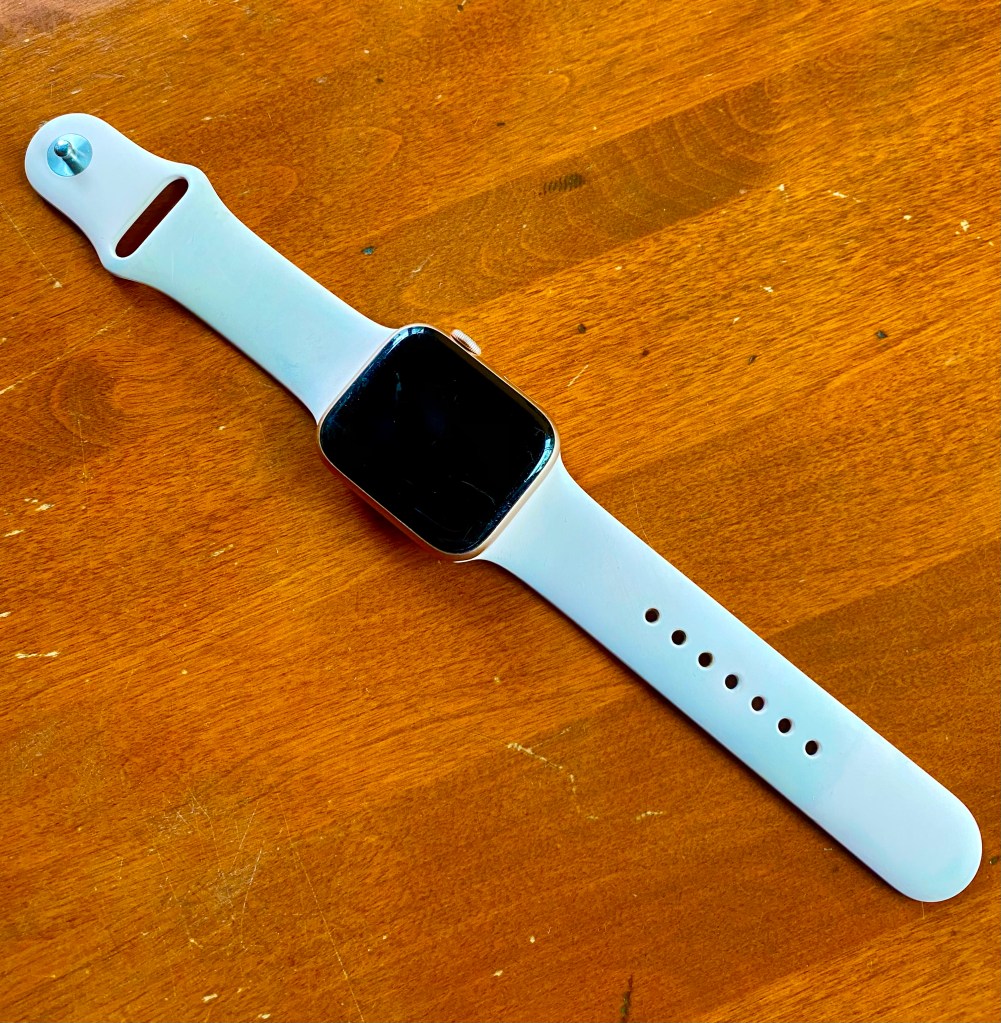
I know, it’s been a long time since you last heard from me. Two hard casts, one removable cast, and weeks of physical therapy done, and still to come, but at least my broken wrist has improved. It’s still kind of weird, not fully able to bend at the same angle as my uninjured wrist, and with noticeable bump on the side, but it’s getting there.
However, I don’t want to dwell on the physical side of my break and recovery. Instead, I’d like to chat about an unexpected lesson and train of thought this break sent me on.
Since my broken, casted wrist was on my non-dominant arm, I was unable to wear my smart watch. I suppose I could have changed it to my other arm, but my injured side couldn’t manage to fasten the watch the few times I attempted it, and it didn’t seem to be worth asking for help every day since my activity level dropped initially after my fall and there wasn’t much to measure.
My experience with a smart watch began with a step tracker. We all heard the advice that 10,000 steps a day is necessary for a healthy life. I admit that there were nights that I walked in circles in my bedroom before going to sleep to hit that magical number and have the party explode on my wrist, fireworks and all. I believe that was my Fit Bit tracker. Oh, the excitement.
Of course, like many others, I’ve become a slave to the almighty tech beings at Apple, and have been so entrenched in their universe of products which all connected together. Thus, I had no choice but to get my own Apple watch. That early iWatch was good for a few years, until my iPhone upgrade bonus came with a new iWatch. Woohoo! Upgraded watch, upgraded usage.
Suddenly I found myself tracking everything. My steps, my sleep, and my calls and texts. At all hours of the day or night there would be pings on my arm, grabbing my attention to see who or what needed me. While I don’t get many notifications on my phone, there were enough to transfer over to my watch to startle me in the middle of the night with a gently snap of the wrist.
So, once that wrist became unavailable for the watch, life became a little less urgent. I saw my texts when I picked up my phone to see if there were any. I’m back to walking again, but I couldn’t tell you how many steps a day. I began to appreciate the unmeasured life. Steps were still taken, even if they weren’t measured. The world would have to accept that I don’t answer my texts the moment my arm was pinged. Guess what, I was still able to sleep, well or crummy, without a watch telling me how the night went. This line of thinking transferred to the scale, where I scaled way back on stepping on. I knew when I gained a few pounds without reading a digital number.
I began to think about all the other ways technology has made us slaves to measurement. I use a Peloton bicycle and the App for my non-walking workouts. And, wow, they feed you stats like a mama feeds her baby. But the stats are more than personal, they are all about sharing in the community. Where are you on the leaderboard? Take a ride, live or archived, and you will know exactly which percentage of the riders you fall into. Me, the bottom. Does that mean I didn’t get a good workout? Nope. I don’t need to compare myself to other riders to feel like I had a good workout. I know exactly how I feel after. On the other hand, many people enjoy the community and the sharing of their stats and it motivates them to work harder. It doesn’t work that way for me. I just need to be better than myself, I am not in a race against the world, and I only see the stats when my ride is completed.
Maybe, when I was younger and the product of a highly competitive business school, I would have thrived on that feedback and fallen for the pressure to share, compare, and try to rise above the crowd. Perhaps my workouts would have been more intense, but I guarantee my mental health would have suffered with the constant comparison and feelings of inadequacy. Because with hundreds, if not thousands of people taking these rides, it would be tough to rise to the top of the pack.
My appreciation for the non-competitive life has also extended to mental endeavors. Most people are aware of Wordle, the once a day word puzzle that has spread virally from a game that a kind husband merely created for his wife, not for profit. Incredibly, there are no ads or fees associated with playing it. There’s a way to share your daily Wordle score without giving away the answer. In my social media groups I see people posting how well they’ve done with the daily puzzle and how many tries it took them to get the answer. Personally, I enjoy the morning brain wake-up call, but feel no need to let the world know how well I did. A word puzzle, played against oneself and the computer doesn’t need to be competitive. It’s simply fun. Or at least that’s what I think it should be. Sometimes I will compare notes with Randy who also plays the game, but not to see who was able to crack the word faster, but to talk about the word of the day if it was really tricky. Fun, not competitive.
This lesson, to appreciate a less measured, less competitive life, came out of a major inconvenience. Who knew? I sometimes think I’d like to wear my watch again to tell time, but I don’t trust my ability to resist the siren call of pings and measurements. It’s been months now that I could wear it, but it hasn’t found its way back onto my healing wrist.
 Donna Pilato
Love all the wisdom you were able to take away from this experience. Often, the technology that’s supposed to connect us is just a distraction from the things we really enjoy.
LikeLike
Agree. We all lived just fine before our “smart” lives. The challenge is to get the benefits without the downside.
LikeLike
Oh what a right on post! So many of us have become slaves to our devices and, although I don’t pretend to be a Luddite nor would I want to be one, we should strive for balance. For you the wake up call was an accident.
LikeLike
I often feel too lazy and feel that I need the motivation of the competitive social atmosphere with todays’ fitness apps….but I know my limit and understand that some people have higher limits. A 63 year-old does not have the endurance of a 35 year old!
LikeLike
And just remember Mr. Big!
LikeLike
Yes, I for one could do without so many screens, and am working on exactly that. The analogue life has so much to offer, I believe, especially when it comes to mental clarity. Anyway, thanks for this post. And Wordle is fun indeed (I’ve been trying Dordle)!
LikeLike
I haven’t heard of Dordle, but I will take a peek! Thanks for reading and the suggestion!
LikeLike